Michael Griswold

A one-day seminar in Houston, for owners and the person who runs the place for them

Pick the job you are tired of doing. Leave with it running without you.

One day, in a room of twenty, with me. You do not need to know how to code. You bring a laptop and one job. You leave with that job running on its own, inside rules you wrote, and someone on your team who can keep it running.

Apply for your companyTen minutes. Nothing is paid until we have talked.

Before software I spent fifteen years running crews: demolition, construction, manufacturing, a dairy, then private credit. Now I run a software company on AI agents, and this is the part of it that has nothing to do with code.

A boardroom table with people seated around it
A room I hosted in Houston. The seminar is the same kind of room, with owners in it.

The kind of job you bring

Something that happens every week, that only you or one other person can do, and that you would hand over today if you trusted it.

  • Chasing the lien waivers and insurance certificates that hold up a payment.
  • Turning a week of delivery notes into invoices.
  • Answering the twenty emails a week that all ask the same question.
  • Getting a quote out the day it is asked for, instead of on Friday.

You do not have to pick it before you apply. We pick it together on the call.

The facts

What it is
A one-day seminar, in person. You and the person who runs your operations sit in a room of twenty with me for a day.
Where
Houston, Texas. You get the address with your setup call.
Who it is for
Owners of real operating companies: contractors, manufacturers, distributors, clinics, agencies. And the one person who keeps the place running for them.
Seats
Ten companies. Two seats each, and both of you come. You do not do this alone and neither does your business.
When
The first room does not have a date yet. I set it with the ten companies who get in, so it works for all of us. You get the date before you pay anything, and you can say no.
What it costs
One price for the company, both seats. I tell you on the call, before you pay anything.
What to bring
A laptop you use for work, and one job you are tired of doing yourself. We set the laptop up with you on a call before the day, so nobody spends the morning installing things.
What you keep paying
The agent runs on a paid plan in your own name, with the company that makes it. You set it up on the call, you own it, and I make nothing from it. We check what it costs that week, because the price moves.
Your files
The work happens on your own laptop, in a folder you pick. Nothing of yours comes to me. Nothing of yours goes on a screen in the room unless you put it there.

This is for you if

  • You run the place. Owner, founder, president, principal.
  • Something in your business is already on a computer. A shared drive, spreadsheets, a customer list, accounting software, email. One of those is enough.
  • You can name the person who keeps things running when you are out, and they can come with you.
  • You can decide to spend on this without asking a committee.
  • You would rather watch it work than take my word for it.

This is not for you if

  • You want to build agents for a living. There are better rooms for that.
  • You want it done for you. You will do it, with me next to you, so you can do it again.
  • Everything in your business is on paper and there is nobody to bring for the second seat.

What happens in the room

Every step is done together, on your own files, before we move to the next one. Nothing is a lecture.

  1. First hour

    Your laptop already works

    Coffee, names, and a look at the job you brought. The setup was done on a call before today. You open the laptop and it is ready.

  2. Morning

    It does your job in front of you

    You point it at one folder of your own business and hand it the job. It does the job while you watch. You see what it can do and where it stops.

  3. Morning

    You write the page that tells it how you work

    One page, in your own words. What it may do on its own, and what it has to ask you about first. It is short, and it is the part that makes the difference between an agent that helps and one you babysit.

  4. Midday

    You learn to check its work

    You check it the way you check a new hire. Three questions, every time. You never take "done" on its word. Lunch is here, and everyone says the job they came to kill.

  5. Afternoon

    You give it a memory and some red lines

    It remembers your vendors, your customers and your decisions, so you stop explaining them. You write down what went wrong once, so it does not go wrong again.

  6. Afternoon

    The job runs without you, and your second seat takes over

    We set the job you brought to run on its own. Then the person you brought runs it, with you watching, so it does not leave with you.

  7. Last hour

    What you take home

    Your files, a checklist for the next thirty days, and my email address.

What you walk out with

  • One job in your business that runs on its own, inside rules you wrote.
  • The one page that tells your agent how you work and what it never does without asking you.
  • A memory it keeps, with your vendors, your customers and your decisions in it.
  • A short list of things it is never allowed to do without asking you first.
  • One screen that shows every agent working for you and what it costs.
  • A person on your team who can keep it running, and a checklist for the thirty days after.
Apply for your companyTen companies. Two seats each.

Why believe me

This is the first time I am running this room, so there is nobody to quote yet. What there is: my own company runs this way every day, and the numbers below were counted, not estimated.

31,000
finished pieces of work my agents produced in the last twelve months, from my desk. Software calls them commits. Counting my brother's desk too it is 42,400. Counted from our own machines on 2026-09-13.
1.1 million
words of written rules and memory my agents work from, opened when they need them. Counted on 2026-09-13.
26
rule files, most of them written the day something went wrong. Counted on 2026-09-13. One is printed below, as it is.
14,096
people downloaded a free tool my agents built, called SageThumbs 2K. Read from GitHub on 2026-09-13. The console I run the agents from, AgentHydra, is public too.

Every number, with the day it was counted and how, is on the numbers page.

One of my rules, as it is written

I have 26 of these. Most were written the day something went wrong. This one came from an agent reading eight notes that belonged to other people while it tidied up. Nothing was damaged. Reading was the line.

Mine is written for my software team, so it is longer than yours will be. In the room you write four lines about your invoices, your customer list or your bank, in your own words.

A rule from my own setwritten 2026-08-10

⛔ Somebody else's data - reading it is the line, not just changing it

Owner directive, Michael, 2026-08-10. AGENTS.md § How to work carries the short version of this; here is the full text. It exists because the mutation half of this rule was written down in 2026-07-03 and the ACCESS half was not, so an agent that would never have deleted a customer row read a dozen of their private notes without pausing.

The rule: a hand-run pass over customer records is scoped to the operator's OWN rows unless he names another owner out loud. Backfill, census, cleanup, migration, "let me just look" - all of it. Filter by owner in the FIRST query. Never enumerate a whole table and let other people's rows ride along because they happened to sort into your page.

The line is ACCESS, not damage. A note you read and wrote nothing for still put that person's private text into a transcript, and it stays there. "It produced no rows", "I only read it", and "nothing was modified" are not defenses - they describe the blast radius, not the act. Judge a data pass by whose records it TOUCHED, never by what it changed.

When a task genuinely needs another owner's rows, say so and get a yes first. "The sweep would be incomplete without them" is a reason to ASK, never a reason to proceed - and an incomplete-but-scoped result you report honestly is always the better outcome. If the answer is yes, it covers that pass and those owners; it does not generalise to the next one.

Michael with two men at an event
Michael with two people outdoors at an event
Michael Griswold speaking at a microphone

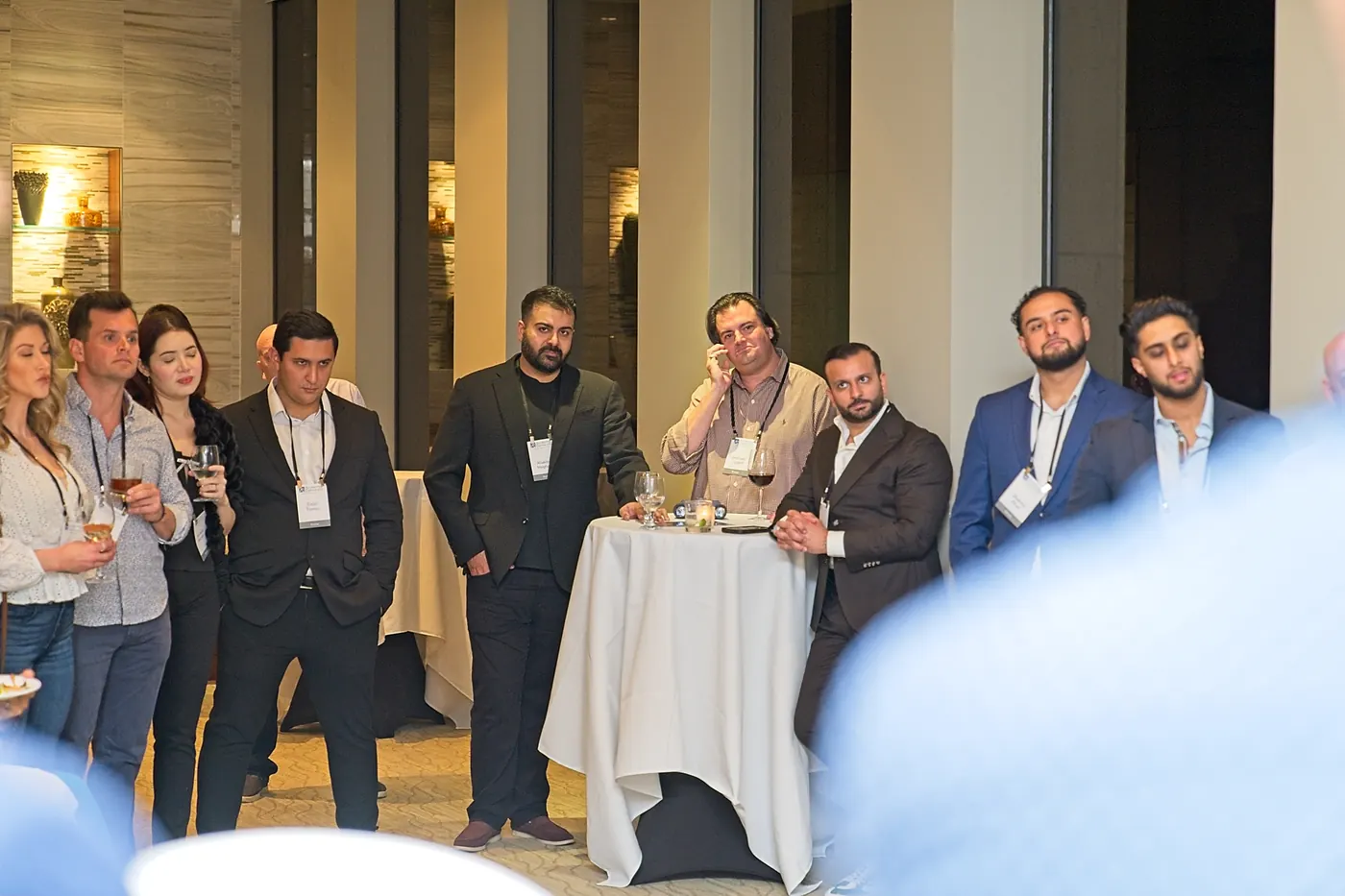
I host the Accredited Capitalists room in Houston every month, for investors and family offices. These are frames from those rooms, not from this seminar, which has not been held yet.

Portrait of Michael Griswold

Who is teaching

I am Michael Griswold. I ran crews before I ran software: demolition, construction, manufacturing, a dairy farm, then private credit and family-office work. Then I built a software company, and I run it on AI agents. The numbers above are what that looks like.

I am not a programmer by trade and I do not write the code. I direct the agents that do, the way you direct people. That is the job I teach, because it is the job you already do.

The deal

What I ask of you: come for the whole day, bring the person who runs your operations, have your laptop set up on the call before, and do every step.

What you get: one job in your business running on its own by the end of the day. Running on its own means three things. It starts without you, either on a clock or when something happens. It does the work. It tells you what it did.

If it is not running: you did the work and did not get what I said you would, so I keep working with you and the person you brought, at no charge, until it runs. Or I give you your money back. You pick. The wording is on the refunds page, and you get it in writing before you pay.

I do not promise a revenue number or hours saved. Nobody has been through this room yet, so there is no honest number to give you, and I will not make one up.

How to apply

  1. 1

    Fill in the application.

    Ten minutes. Your name, your company, what you run, and who you would bring. Nothing is paid.

  2. 2

    I read it myself.

    You hear back from me: a yes, a no with the reason, or a question. I read them as they come in.

  3. 3

    We talk for twenty minutes.

    You get the price, we pick the job you would bring, and we set the date with the other companies. Then you decide.

Apply for your company

Questions people ask before they apply

Do I need to know how to code?

No. Nobody writes code. If you can write an email and open a folder, you can do everything in this room.

What is an AI agent, in plain words?

A program you give a job to. Not a chat box you type questions into. You point it at a folder of your real files, you tell it how you like things done, and it does the job and reports back. It can read, write, sort, draft, check and send. It works while you do something else.

Is this the same as ChatGPT?

No. ChatGPT answers a question and forgets you. An agent does a job, remembers how you like it done, and does it again next week without being asked.

Does my company information go into an AI, and who can see it?

Your files stay on your laptop. Nothing of yours is sent to me, and nothing of yours goes on a screen in the room unless you choose to show it. When the agent works, it sends the part of the file it needs to the company that makes it, the same way ChatGPT does when you paste something in. You pick the folder, so you pick what it can see. If there is a folder you would not want touched, do not point it there, and we will talk about that on the call.

What software is it, and what does it cost after the day?

Claude Code, made by Anthropic. It runs on your own laptop. You need a paid plan in your own name, which we set up together on the call before the day. You own the account and I make nothing from it. Prices move, so we check what it costs that week rather than printing a number here that goes stale.

What do I bring?

A laptop you use for work, and one job you are tired of doing yourself. Before the day we set the laptop up with you on a call. You do not install anything on your own.

What if my laptop is locked down by an IT person?

Tell me on the call and bring them in. If nothing can be installed on it, we sort out a different machine before the day rather than on it.

Will I be lost?

No. There are ten companies in the room and I am there all day. If a table is stuck, we stop until it is not. Nobody in this room has done this before except me.

Who else is in the room?

Owners of operating companies, and the person who runs the place for them. No developers, no vendors selling you anything.

Who should I bring, exactly?

The person who keeps things running when you are out. An office manager, a controller, an operations manager, a dispatcher, a chief of staff, a general manager. If you have two candidates, bring the one who is at a computer all day, not the one in a truck.

Does this mean I let someone go?

No. The job you hand over is one nobody wanted. The person you bring leaves with more authority than they came with, not less, and that is what to tell them when you ask them to come.

What does it cost?

One price for the company, both seats. I tell you on the call, before you pay anything. Nothing is charged when you apply.

When is it?

The first room has no date yet. I will not pick one until I know who is in it, so it works for all ten companies. You get the date before you pay.

What happens after the day?

You go home with your files, a thirty-day checklist and my email address. The job you set up keeps running.

What if it does not work for my business?

Then you did not get what I said you would, so I keep working with you at no charge until you do, or I give your money back. The wording is in The deal, above, and on the refunds page.

One job off your desk, running without you, by the end of the day.

Ten companies, two seats each. Apply and we talk before anything is paid.

Apply for your company

Something else to ask first? Email contact@michaelgriswold.com and I answer it myself.